Beautiful hair extensions are an investment — so one of the most common questions we hear in our Salt Lake City studio is a version of, “How long will these actually last?” It’s the right question to ask. Extensions add instant length, fullness, and confidence, but many people arrive at Skandia Kollektiv frustrated by a previous set that tangled, went dry, or started slipping far too soon. Almost every time, the culprit isn’t bad luck — it’s hair quality, installation, or care that fell short somewhere along the way. The good news: when you get those three things right, quality extensions stay soft, secure, and gorgeous for many months. Here’s exactly how we make that happen for our guests, and how you can protect your investment at home.
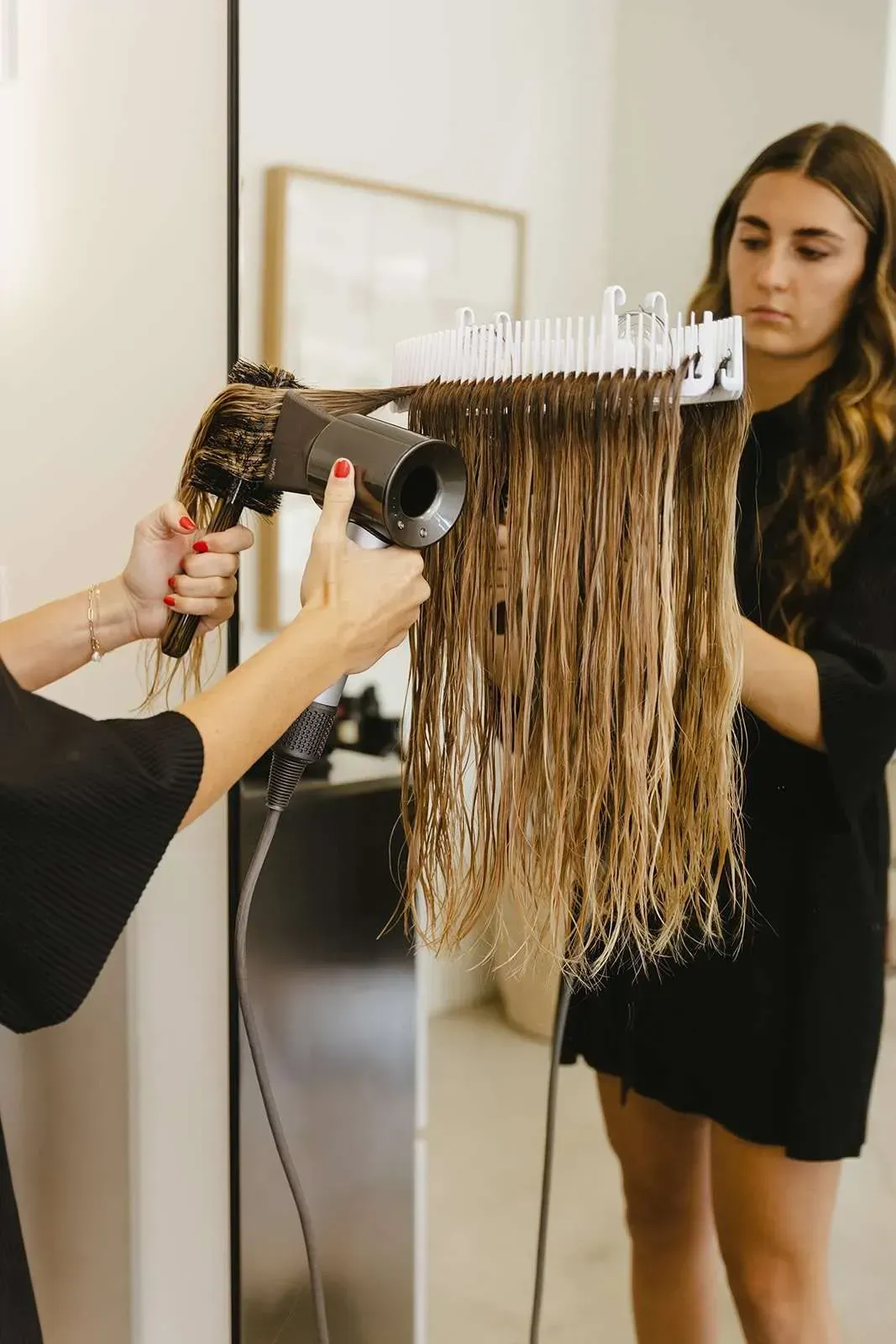
Start With High-Quality Hair for the Longest Wear
The quality of the hair itself is the single biggest factor in how long your extensions will last — and it’s the one thing you can’t fix after the fact. In our experience, this is where the “my extensions only lasted a few weeks” stories almost always begin.
Premium extensions are made from 100% Remy human hair, which means the cuticles are all kept intact and aligned in the same direction, just like the hair growing from your own head. That alignment is what keeps the hair smooth, reflective, and far less prone to tangling. Lower-quality hair, by contrast, is often stripped and heavily coated in silicone to fake that shine. It looks beautiful in the package and for the first wash or two — then the coating wears off, and the hair underneath turns dry, brittle, and matted.
Choosing premium hair from the start gives you:
- A longer lifespan — quality Remy hair holds up for months of wear and re-installs.
- Far less tangling and matting, because aligned cuticles glide instead of catching.
- Natural, believable movement that blends seamlessly with your own hair.
- Better styling results — the hair takes heat and holds a curl like healthy hair should.
This is exactly why we hand-select the hair we use for our NBR® (Natural Beaded Row) extensions and hand-tied wefts. Investing in premium hair up front almost always costs less over time than replacing a cheap set that failed early.
Professional Installation Keeps Extensions Secure
Even the finest hair won’t last if it’s installed incorrectly. How the extensions are attached — and how well the method fits your hair — determines whether they stay comfortable and secure or start to loosen, slip, and stress your natural hair.
Before we place a single weft in the studio, we assess your hair’s density, texture, scalp health, and your day-to-day lifestyle. A busy mom who’s constantly in a ponytail, a swimmer, and someone who blow-dries daily each need a slightly different approach. Matching the method and the weight to the person is what makes extensions both long-lasting and gentle. Weight-distributed, sewn-in methods are our specialty precisely because they spread the hold across a row instead of pulling on individual strands:
- NBR® (Natural Beaded Row) — wefts sewn onto a beaded foundation, with no glue, heat, or tape touching your natural hair.
- Hand-tied wefts — fine, flat wefts tied onto a discreet foundation so they lie flat and move naturally.
Because a gentle method places so little stress on your natural hair, the extensions blend beautifully and hold their position far longer. It’s worth knowing the flip side too: installation done wrong is where real trouble starts. If you’ve ever wondered whether extensions are risky, our honest guides on whether hair extensions are bad for your hair and whether extensions can damage your hair walk through what actually causes damage — and it’s almost always tension, weight, or skipped maintenance, not the extensions themselves.
Daily Care Is What Makes Extensions Last
Once you leave our chair, at-home care is where the real longevity is won or lost. The habits we send every guest home with are simple, and they make an enormous difference in how long your extensions stay soft and tangle-free.
Brush gently, and brush often
Use a proper extension-safe brush and always start at the ends, working your way up. Ripping a brush from the roots down drags on the wefts and creates the exact tangling you’re trying to avoid. A few extra seconds, two or three times a day, keeps everything smooth.
Switch to sulfate-free products
Harsh, sulfate-heavy shampoos strip moisture from extension hair, which can’t replenish its own oils the way your scalp does. Hydrating, sulfate-free formulas keep the hair soft and protect the wefts. This matters even more if your hair tends to dry out — our guide to why your hair extensions feel dry and how to fix it goes deeper here.
Protect your hair while you sleep
Friction overnight is a leading cause of matting at the root. A loose braid, a low ponytail, or a silk pillowcase dramatically reduces tangling while you sleep. Never go to bed with soaking-wet extensions.
Be smart with heat
Quality human-hair extensions can absolutely be heat-styled — but excessive heat shortens their life just like it does your own hair. Always use a heat protectant and keep your tools at a moderate temperature. For more on this, see how to protect extensions from heat damage.
None of this is complicated, and it’s genuinely low-effort once it’s routine. Guests with packed schedules are often our biggest fans of extensions for exactly this reason — we cover realistic routines in extensions for busy moms: easy hair solutions.
Keep Your Maintenance Appointments (This Is Non-Negotiable)
Regular maintenance is the piece people underestimate the most — and it’s the difference between one set of extensions lasting a few months versus most of a year. As your natural hair grows, the row gradually sits farther from your scalp, so it needs to be moved back up. Most sewn-in methods, including NBR® and hand-tied wefts, need a move-up every 6 to 8 weeks.
At a maintenance visit, your stylist will:
- Take the wefts down and re-install them closer to the scalp as your hair grows out.
- Check the health of your natural hair and the extensions for any tangling or slipping.
- Deep-condition and refresh the hair so it stays soft and shiny.
- Release any tension that has built up, keeping everything comfortable and secure.
Skipping these appointments is the fastest way to shorten the life of your extensions — and the most common cause of matting and unnecessary stress on your natural hair. Guests who stay on schedule consistently get the most beautiful, longest-lasting results. If a fresh, full look is your goal, our before-and-after hair extensions transformations show what well-maintained extensions can do.
Ready for Hair That Lasts?
The best way to get long-lasting extensions is to start with a licensed artist who chooses the right hair, method, and maintenance plan for you. At Skandia Kollektiv in Salt Lake City, every extension journey begins with a consultation — honest advice, premium hair, and a look built to stay beautiful for months.
Book a ConsultationFrequently Asked Questions
How long do hair extensions last?
With quality Remy human hair, professional installation, and proper care, the hair itself typically lasts around 6 to 12 months, and often longer with gentle use. The install, though, needs a maintenance move-up roughly every 6 to 8 weeks as your natural hair grows, so the same wefts are reused across several appointments while the row is repositioned closer to the scalp. Skipping move-ups is the fastest way to shorten the life of both your extensions and your natural hair.
How do I keep my hair extensions from tangling and matting?
Brush gently from the ends up with a proper extension brush, use sulfate-free products, never sleep on soaking-wet hair, and protect the hair at night with a loose braid or silk pillowcase. Tangling and matting almost always come from friction and skipped brushing rather than the extensions themselves — and keeping your maintenance appointments prevents the matting that builds at the root between move-ups.
Which type of hair extensions lasts the longest?
Professionally installed, weight-distributed methods like NBR® (Natural Beaded Row) and hand-tied wefts tend to last the longest because no glue, heat, or tape touches your natural hair, and the wefts can be moved up and reused for many months. The single biggest factor is the quality of the hair — 100% Remy human hair with aligned cuticles stays smooth and tangle-free far longer than heavily processed hair.
How often do hair extensions need to be moved up?
Most sewn-in methods, including NBR® and hand-tied wefts, need a move-up every 6 to 8 weeks. As your natural hair grows, the row sits farther from the scalp, so your stylist takes the wefts down, checks the hair, and re-installs them closer to the root. These regular visits release tension, prevent matting, and are what let one set of quality extensions stay beautiful for months.