It’s one of the first questions we hear in the consultation chair: are hair extensions bad for your hair? It’s a smart question to ask — and the honest answer is that extensions themselves are not the problem. In our Salt Lake City studio, we’ve seen firsthand that damage almost never comes from wearing extensions. It comes from the wrong hair, the wrong method, too much tension, or maintenance that gets skipped. Choose quality hair, a gentle professional method, and a stylist who assesses your hair before touching it, and extensions can be completely safe — and often protect the hair you already have. Below, we’ll walk through the real risks, which methods are gentlest, and exactly how to keep your natural hair healthy underneath.
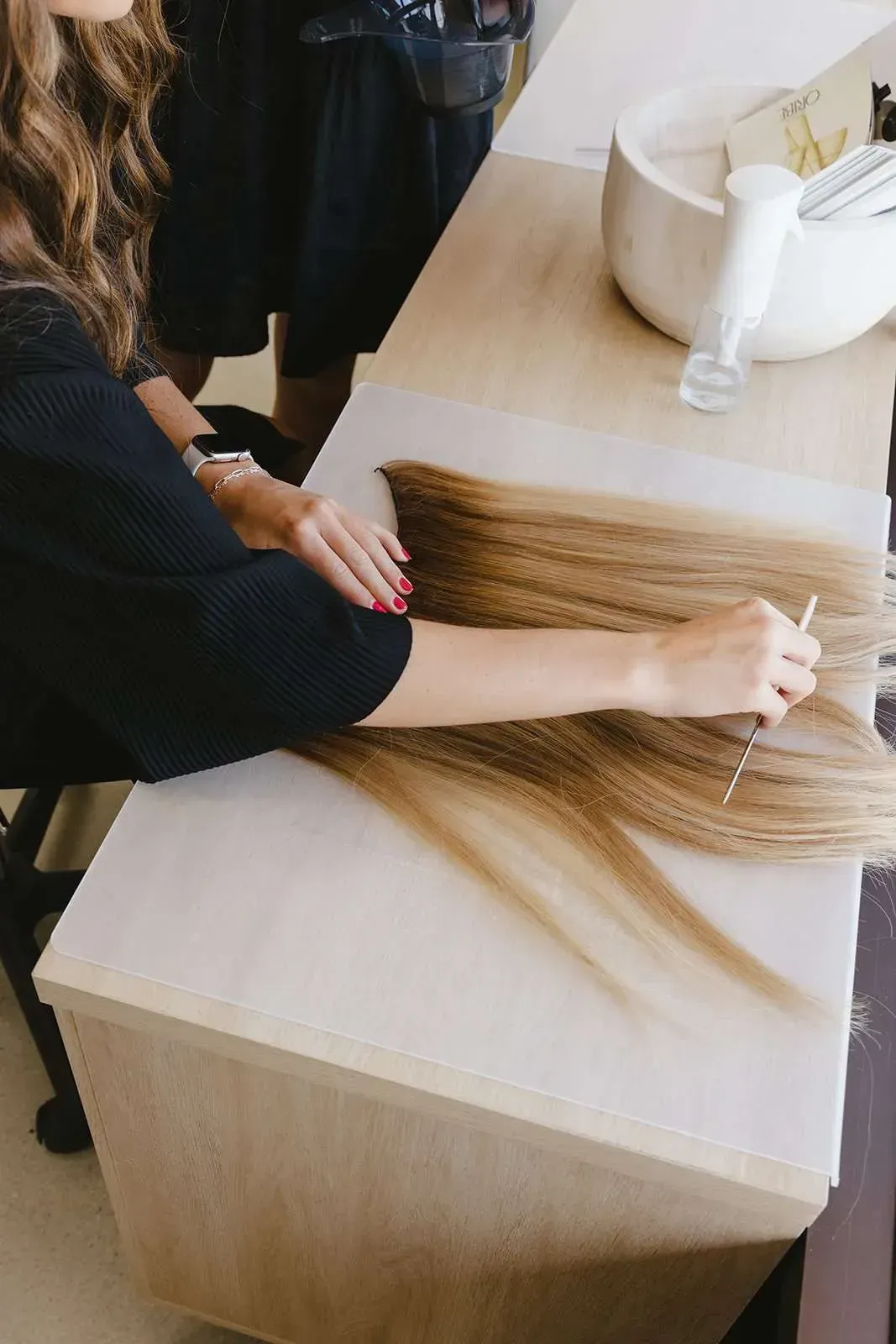
Are Hair Extensions Bad for Your Natural Hair?
Hair extensions are not automatically bad for your hair. When they’re applied by a trained, licensed professional using the right method for your hair type, they can be worn safely for months at a time. The real risk isn’t the extensions — it’s tension and weight.
Extensions that are too heavy for your hair, or placed too tightly against the scalp, put sustained stress on the follicle. Over time, that stress is what can lead to breakage or traction alopecia. This is precisely why a real consultation matters. Before we recommend anything, we assess your hair’s density, strength, elasticity, and your day-to-day lifestyle — because the right amount of hair for a client with fine, fragile strands is very different from what someone with thick, healthy hair can comfortably carry.
Here’s the part that surprises people: when they’re done correctly, extensions can actually protect your natural hair. Full, blended hair holds a style beautifully, so many of our guests reach for hot tools far less often — less daily heat, less mechanical stress, and a break for the hair growing underneath. If you want to go deeper on the hair-loss question specifically, we cover it in detail in can hair extensions cause hair loss and can hair extensions damage your hair.
Which Types of Hair Extensions Cause the Most Damage?
Not all extensions are created equal, and the method matters more than almost anything else. Some are gentle enough to be considered damage-free for most healthy hair; others concentrate tension or rely on glue and heat that can compromise your strands.
- Occasional clip-ins cause minimal damage when they’re worn gently and not every single day. They’re temporary and come out at night, so there’s no sustained tension — as long as you’re not clipping them into the same fragile section daily.
- Glue-in and fusion extensions are the methods most likely to cause trouble. Bonds and adhesives concentrate weight on a small cluster of strands and can leave residue that’s tough on the hair during removal.
- DIY drugstore tape-ins applied at home are a common source of the “extensions ruined my hair” stories we hear — not because tape-ins are inherently bad, but because placement, tension, and removal are easy to get wrong without training.
- Professional, weight-distributed methods — like NBR® and hand-tied wefts — are the gentlest options because no glue, heat, or tape ever touches your natural hair.
Damage also creeps in when low-quality hair is used or when extensions are simply left in too long. Regular move-ups and proper professional removal are non-negotiable for keeping your hair healthy. If you’re weighing your options, our guide to hair extensions for thinning hair is a good next read, and guests with texture will want hair extensions for curly hair: what you need to know.
Why the Method We Use Is Designed to Be Gentle
At Skandia Kollektiv, our signature approach is built specifically around not damaging your hair. Our NBR® (Natural Beaded Row) extensions use a beaded foundation with wefts sewn onto a row — no glue, no heat, no tape. Because the weight is spread evenly across a row instead of yanking on individual strands, NBR® is considered damage-free for most healthy hair. Our hand-tied wefts work on the same gentle principle: fine, flat wefts tied onto a discreet foundation that lie flat, blend seamlessly, and move naturally with your own hair.
These methods take skill, training, and hours of meticulous work — which is exactly why they’re so kind to your hair. A cheap method on quality hair still disappoints; a great method is what lets you wear beautiful hair for months without paying for it in breakage.
How to Prevent Hair Damage From Extensions
Proper care is the secret to keeping your natural hair healthy while you wear extensions. None of this is complicated — it’s the same simple routine we send every guest home with.
- Use the right products. Sulfate-free, extension-safe shampoo and conditioner keep the hair soft and the wefts intact. Skip harsh, heavily clarifying formulas on the wefts.
- Brush gently, from the ends up. A proper extension brush and a few extra seconds prevent the tangling and tugging that stresses your hair.
- Never sleep on soaking-wet hair. Let it dry (or rough-dry the roots), then loosely braid or tie it and consider a silk pillowcase to cut friction and matting overnight.
- Be smart with heat and water. Use a heat protectant, keep tools moderate, and rinse and dry after swimming so chlorine and minerals don’t build up.
- Keep your maintenance appointments. Moving the wefts up on schedule — usually every 6 to 8 weeks — releases any tension as your hair grows and keeps everything sitting comfortably. Extensions worn past their move-up date are where a lot of avoidable damage happens.
For the day-to-day details, our guests love how to keep hair extensions soft & shiny, and busy schedules are no obstacle — see extensions for busy moms: easy hair solutions. Most importantly, healthy hair with extensions comes down to consistency and professional care.
So — Are Hair Extensions Worth It?
When they’re installed and maintained correctly, extensions can be one of the best investments you make in how you look and feel every day. They add length, fullness, and dimension, boost confidence, and often save styling time. The wins are real — you can see the kind of change we mean in our before and after hair extensions transformations.
The key is choosing an experienced, licensed stylist who prioritizes your hair’s health over shortcuts. Extensions should enhance your hair, never compromise it — and with the right method and care, that’s exactly what they do.
Get an Honest Answer for Your Hair
The only way to know if extensions are right for your hair is to have a licensed artist look at it in person. At Skandia Kollektiv in Salt Lake City, every extension journey starts with a consultation — honest advice, no pressure, and a plan built to keep your natural hair strong and healthy.
Book a ConsultationFrequently Asked Questions
Are hair extensions bad for your natural hair?
No — extensions themselves are not bad for your hair. Damage comes from the wrong method, too much tension, low-quality hair, or skipped maintenance, not from wearing extensions. When a licensed stylist assesses your hair first and uses a gentle, weight-distributed method like NBR® or hand-tied wefts, extensions are considered damage-free for most healthy hair and can even protect it by reducing daily heat styling.
Which type of hair extensions causes the most damage?
The methods most likely to cause damage are glue-in and fusion extensions, and DIY drugstore tape-ins or clip-ins worn too tightly or too often, because they concentrate tension on a small section of hair or leave residue. Occasional clip-ins used gently cause minimal damage. Professional, weight-distributed methods such as NBR® (Natural Beaded Rows) and hand-tied wefts are the gentlest options because no glue, heat, or tape touches your natural hair.
Can hair extensions cause hair loss or traction alopecia?
They can if they’re installed too tightly, made too heavy for your hair, or left in past their move-up date — sustained tension on the follicle is what leads to traction alopecia. This is exactly why a professional consultation matters: a trained stylist matches the weight and placement to your hair’s density and strength, and moves the extensions up every 6 to 8 weeks so tension never builds. Properly installed and maintained, quality extensions do not cause hair loss.
How do I keep my hair healthy while wearing extensions?
Use sulfate-free, extension-safe shampoo and conditioner, brush gently from the ends up with a proper extension brush, never sleep on soaking-wet hair, protect the hair at night with a loose braid or silk pillowcase, and keep your maintenance appointments every 6 to 8 weeks. Consistency and professional move-ups are what keep both your extensions and your natural hair healthy.