It’s one of the most common worries we hear before a first appointment: can hair extensions damage your hair? Stories of breakage, thinning edges, and “extensions that ruined my hair” make the hesitation completely understandable. But in our Salt Lake City studio, we’ve seen the truth up close for years — extensions themselves are not the problem. Damage almost always traces back to the wrong method, hair that’s too heavy for the strands carrying it, low-quality wefts, or care that gets skipped. Choose a gentle professional method and a stylist who assesses your hair before touching it, and extensions can be genuinely safe — and often protect the hair you already have. Below, we’ll walk through exactly what causes damage, how to spot the warning signs, and how we keep our guests’ natural hair healthy underneath.
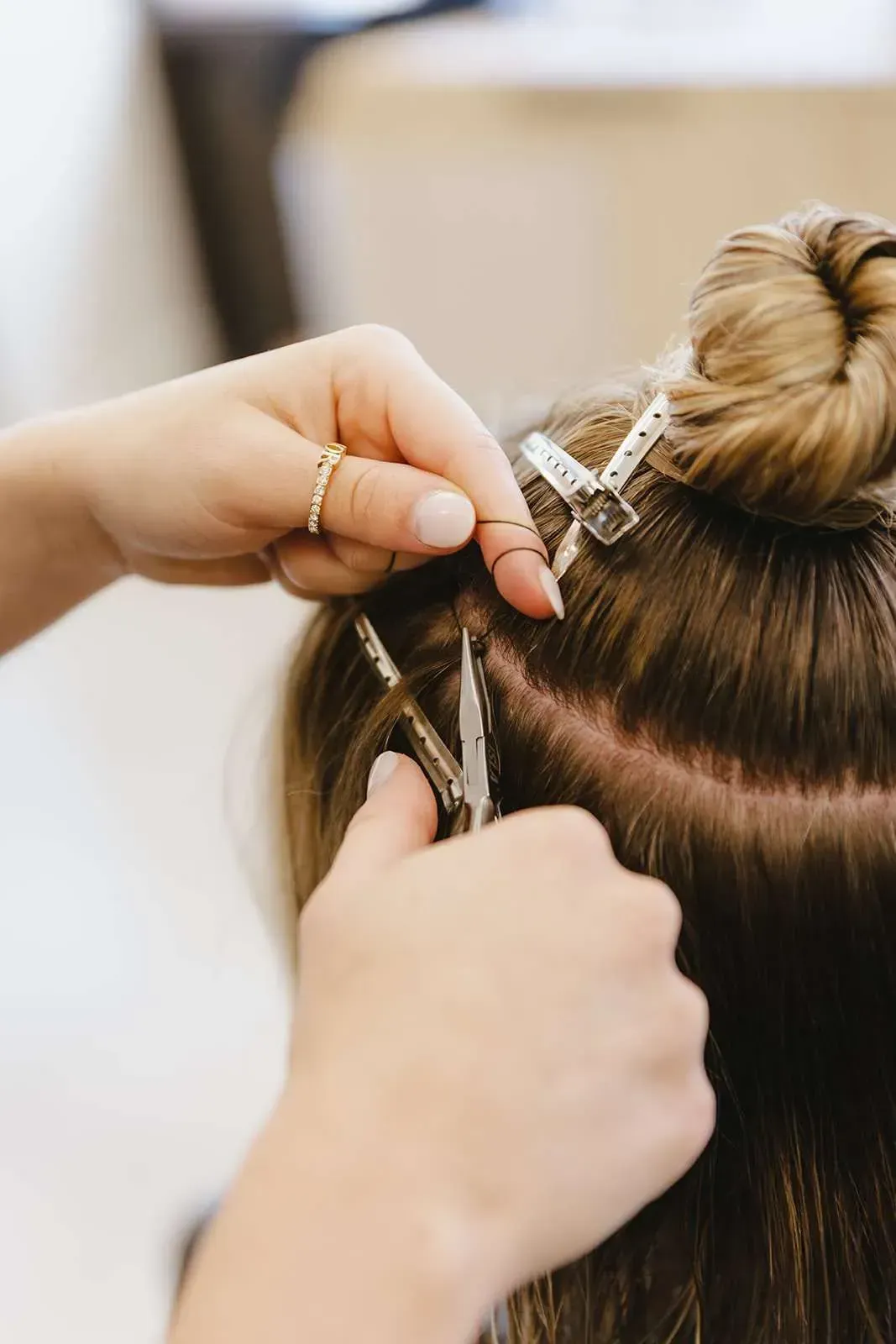
Can Hair Extensions Damage Your Hair?
Here’s the honest answer: extensions can cause damage — but only when they’re installed incorrectly or maintained poorly. Excessive tension, uneven weight distribution, or leaving extensions in far too long can lead to breakage, shedding, or scalp irritation. When extensions are customized to your hair type and installed by a trained, licensed professional, they should protect your natural hair, not harm it.
The real risk isn’t the extensions — it’s tension and weight. Extensions that are too heavy for your hair, or placed too tightly against the scalp, put sustained stress on the follicle. Over time, that stress is what can cause problems. This is exactly why a genuine consultation matters. Before we recommend anything, we assess your hair’s density, strength, and elasticity along with your day-to-day lifestyle, because the right amount of hair for a guest with fine, fragile strands is very different from what someone with thick, healthy hair can comfortably carry. We go deeper on the follicle question in can hair extensions cause hair loss, and if you’re weighing the decision overall, are hair extensions bad for your hair is a helpful companion read.
The factors that actually determine whether damage occurs come down to four things:
- The installation method — glued and fused methods stress the hair far more than gentle, weight-distributed ones.
- The quality of the hair extensions — cheap wefts tangle, drag, and shed.
- The experience of the stylist — placement and tension are learned skills, not guesswork.
- Your aftercare routine — the right products and habits keep both your hair and the wefts healthy.
Which Extension Methods Are Gentlest — and Which Cause Damage
The method matters more than almost anything else. Some approaches are gentle enough to be considered damage-free for most healthy hair; others concentrate tension or rely on glue and heat that can compromise your strands.
At Skandia Kollektiv, our signature approach is built specifically around not damaging your hair. Our NBR® (Natural Beaded Row) extensions use a beaded foundation with wefts sewn onto a row — no glue, no heat, no tape. Because the weight is spread evenly across a row instead of pulling on individual strands, NBR® is considered damage-free for most healthy hair. Our hand-tied wefts work on the same gentle principle: fine, flat wefts tied onto a discreet foundation that lie flat, blend seamlessly, and move naturally with your own hair. These methods take skill, training, and hours of meticulous work — which is precisely why they’re so kind to your hair.
By contrast, the methods most likely to cause trouble are glue-in and fusion extensions, which concentrate weight on a small cluster of strands and can leave residue that’s tough on the hair during removal, and DIY drugstore tape-ins or clip-ins worn too tightly or too often. Occasional clip-ins used gently cause minimal damage — the trouble starts when they’re clipped into the same fragile section every day. If your hair is already fine or fragile, our guide to hair extensions for thinning hair is worth reading before you book, and guests with texture will want hair extensions for curly hair: what you need to know.
Common Causes of Hair Extension Damage
Understanding what actually causes damage is the best way to avoid it. In our experience, nearly every case of extension-related damage traces back to one of these:
- Extensions that are too heavy for your natural hair’s density and strength.
- Improper installation or removal — the wrong tension going in, or wefts torn out rather than carefully removed.
- Skipping maintenance appointments so the wefts drift and tension builds as your hair grows.
- Using the wrong products at home — harsh, heavily clarifying, or sulfate-laden formulas on the wefts.
- Low-quality hair that tangles and mats, dragging on your natural strands every time you brush.
Notice that almost none of these are caused by extensions existing — they’re caused by choices around the extensions. That’s good news, because it means damage is largely preventable. At Skandia Kollektiv, we educate every guest on proper care and schedule regular maintenance to keep both the extensions and the natural hair underneath healthy.
Warning Signs Your Extensions May Be Causing Damage
Extensions should feel secure, but never painful. We tell every guest to watch for a few specific signals, because catching them early almost always prevents any lasting harm:
- Ongoing scalp soreness or tightness, especially in the first days after an install that doesn’t ease.
- Tenderness at the attachment points, or beads and wefts that feel like they’re tugging.
- Short, broken hairs or noticeable shedding around the perimeter and part.
- Itching or irritation at the scalp that lingers.
If you notice any of these, don’t wait it out — reach out to your stylist for a check. A quick adjustment to tension or placement is usually all it takes. This is one of the biggest advantages of working with a licensed professional rather than a DIY kit: someone is watching the health of your hair, not just the look.
How to Prevent Hair Damage With Extensions
Preventing damage comes down to professional care and consistency — and none of it is complicated. It’s the same simple routine we send every guest home with:
- Choose a licensed extension specialist who assesses your hair before recommending a method.
- Keep your maintenance appointments. For sew-in methods like NBR® and hand-tied wefts, that usually means moving the wefts up every 6 to 8 weeks so tension releases as your hair grows.
- Use salon-approved, sulfate-free products made for extensions to keep the hair soft and the wefts intact.
- Brush gently, from the ends up, with a proper extension brush to prevent tugging and matting.
- Be smart with heat and water. Use a heat protectant, keep tools moderate, never sleep on soaking-wet hair, and protect the hair at night with a loose braid or silk pillowcase.
When extensions are treated as an investment rather than a quick fix, they can be worn safely and comfortably for months. For the day-to-day details our guests rely on, how to keep hair extensions soft & shiny is a favorite, and busy schedules are no obstacle — see extensions for busy moms: easy hair solutions. And once you see how healthy, natural extensions can look, our before and after hair extensions transformations show exactly the kind of result we mean.
Get an Honest Answer for Your Hair
The only way to know if extensions are right for your hair is to have a licensed artist look at it in person. At Skandia Kollektiv in Salt Lake City, every extension journey starts with a consultation — honest advice, no pressure, and a plan built to keep your natural hair strong and healthy.
Book a ConsultationFrequently Asked Questions
Can hair extensions damage your hair?
Extensions do not damage healthy hair on their own. Damage comes from poor installation, hair that’s too heavy for your strands, low-quality wefts, wearing extensions past their move-up date, or skipping proper aftercare — not from wearing extensions themselves. When a licensed stylist assesses your hair first and uses a gentle, weight-distributed method like NBR® or hand-tied wefts, extensions are considered damage-free for most healthy hair and can even protect it by cutting down on daily heat styling.
How long can you safely leave hair extensions in before they cause damage?
Professional sew-in methods like NBR® and hand-tied wefts should be moved up every 6 to 8 weeks. As your natural hair grows, the beaded row or foundation drifts away from the scalp and tension slowly builds — moving the wefts up on schedule releases that tension before it can stress the follicle. Extensions worn well past their move-up date are one of the most common avoidable causes of breakage we see.
How do I know if my extensions are damaging my hair?
Warning signs include ongoing scalp soreness or tightness, tenderness at the attachment points, noticeable shedding or short broken hairs around the perimeter, or beads and wefts that feel like they’re pulling. Extensions should feel secure but never painful. If anything feels tight or sore, book a check with your stylist promptly — early adjustment usually prevents any lasting damage.
Are professional hair extensions worth it if I’m worried about damage?
Yes — the method and the stylist are what protect your hair. A licensed artist matches the weight and placement to your hair’s density and strength, uses quality hair, and keeps you on a proper maintenance schedule so tension never builds. At Skandia Kollektiv in Salt Lake City, every extension journey starts with a consultation precisely so we can protect the hair you already have while you enjoy the length and fullness you want.