“Can I even get extensions with curly hair?” is one of the questions we hear most often in our Salt Lake City studio — usually from someone who’s been told her curls are “too much” to work with. The honest answer is a resounding yes. Curly, wavy, and coily hair can wear extensions beautifully; in fact, texture is an advantage, because natural curl hides the wefts far better than sleek straight hair does. The trick isn’t forcing your curls to behave — it’s choosing the right hair, matching your exact curl pattern, and blending with a skilled dry cut. Below, we’ll walk through everything we’d tell you in a consultation: how to choose extensions for curly hair, how we make them disappear into your own texture, and how to keep both your curls and your extensions healthy.
Can You Get Hair Extensions on Curly Hair?
Yes — and often more seamlessly than you’d expect. The reason curly hair sometimes gets a bad reputation for extensions is that curls come with three variables straight hair doesn’t: varied texture, higher density near the scalp, and shrinkage. A curl that reads as shoulder-length when dry might stretch to mid-back when wet, so length has to be planned around how your hair actually behaves, not how it looks in the mirror at that moment. When those variables are ignored — the wrong curl pattern, a wet cut, extensions that are too straight — the mismatch is obvious. When they’re accounted for, the result is full, uniform curls that look like they simply grew that way.
This is exactly why we start every curly-hair guest with a real consultation. Before we recommend anything, we look at your curl type, density, elasticity, and how much your hair shrinks, then plan the texture and length around all of it. Curl-matching is a craft, and getting it right up front is the difference between extensions that blend and extensions that announce themselves.
Choosing the Best Hair Extensions for Curly Hair
When it comes to extensions for curly hair, texture is everything. The single biggest mistake we see is people buying straight extensions and planning to curl them every day — that almost never blends, and the curl falls out by lunchtime. Instead, the extensions should match your natural curl pattern from the start so they move, shrink, and respond to humidity the way your own hair does.
- Choose 100% human hair, matched to your curl pattern. Look for hair labeled wavy, curly, kinky-curly, or coily to match your family of texture. Human hair holds its curl, takes color, and reacts to moisture like the real thing — synthetic and straight-hair-curled options don’t.
- Match the pattern, not just the length. A 3A loose wave and a 4B coil need completely different hair. Getting the pattern right is what lets the extensions disappear into your own curls.
- Pick a gentle, weight-distributed method. Our signature NBR® (Natural Beaded Row) extensions and hand-tied wefts use a beaded, sewn foundation — no glue, no heat, no tape ever touches your natural hair. Because the weight spreads across a row instead of pulling on individual curls, these methods are considered damage-free for most healthy hair and lie flat enough to hide inside curly texture.
Quality matters more than quantity here. A great method on great hair is what lets curly extensions look natural for months; a cheap shortcut disappoints no matter how careful you are. If you’re weighing your options, our guide to hair extensions for thinning hair is a helpful next read for anyone whose curls have lost density over time.
How to Blend Hair Extensions with Curly Hair
Blending is where curly-hair extensions are won or lost, and it comes down to two things: the cut and the styling. We cut curly extensions dry, curl by curl, so the layers follow the natural shape and shrinkage of your hair — cutting curly hair wet is how you end up with layers that spring up far shorter than intended once they dry. A custom dry cut lets the extensions and your own curls settle into one continuous shape.
Styling the two together is the second half. When you use the same curl cream, gel, or leave-in on your natural hair and the extensions, the texture and definition unify and the line between them vanishes. A few habits that make the blend effortless:
- Style both at once. Scrunch product through your roots and the wefts together so the whole head reads as one curl pattern.
- Go easy on heat. Excess heat loosens curl patterns over time and makes the extensions and your natural hair drift apart in texture. A diffuser on low is your friend; a flat iron is not.
- Refresh, don’t restart. On day two or three, a little water and curl cream revives definition without heat. Our guests love the low-maintenance mornings this gives them — a big reason extensions for busy moms are so popular in our chair.
Protecting Your Natural Curls While Wearing Extensions
Protecting the hair growing underneath is just as important as the look on top — and with curly hair, it’s mostly about tension and moisture. A lightweight, low-tension install is the foundation: because NBR® and hand-tied methods distribute weight across a row rather than yanking on individual curls, they don’t create the concentrated pull that leads to breakage. This is the same reason these methods are so gentle on all hair types, not just curly — we go deeper on that in are hair extensions bad for your hair.
From there, healthy curly hair with extensions is a simple routine:
- Keep your curls moisturized. Curly and coily hair runs drier by nature, so extension-safe, sulfate-free products and a regular leave-in or curl cream keep both your hair and the wefts soft and defined.
- Detangle gently, from the ends up. Work through knots with a wide-tooth comb or your fingers on damp, conditioned hair — never yank a dry tangle.
- Protect your curls at night. A satin or silk pillowcase, or a loose “pineapple” on top of your head, cuts friction, preserves curl definition, and prevents the matting that friction causes overnight.
- Keep your move-up appointments. Moving the wefts up on schedule — usually every 6 to 8 weeks — releases tension as your hair grows so it never has a chance to build. Extensions worn past their move-up date are where most avoidable damage happens.
Done this way, extensions can actually protect curly hair by cutting down the daily heat styling and manipulation that fragile curls hate. For more on keeping wefts looking new, our guests reach for how to keep hair extensions soft & shiny.
What Curly-Hair Extensions Can Look Like
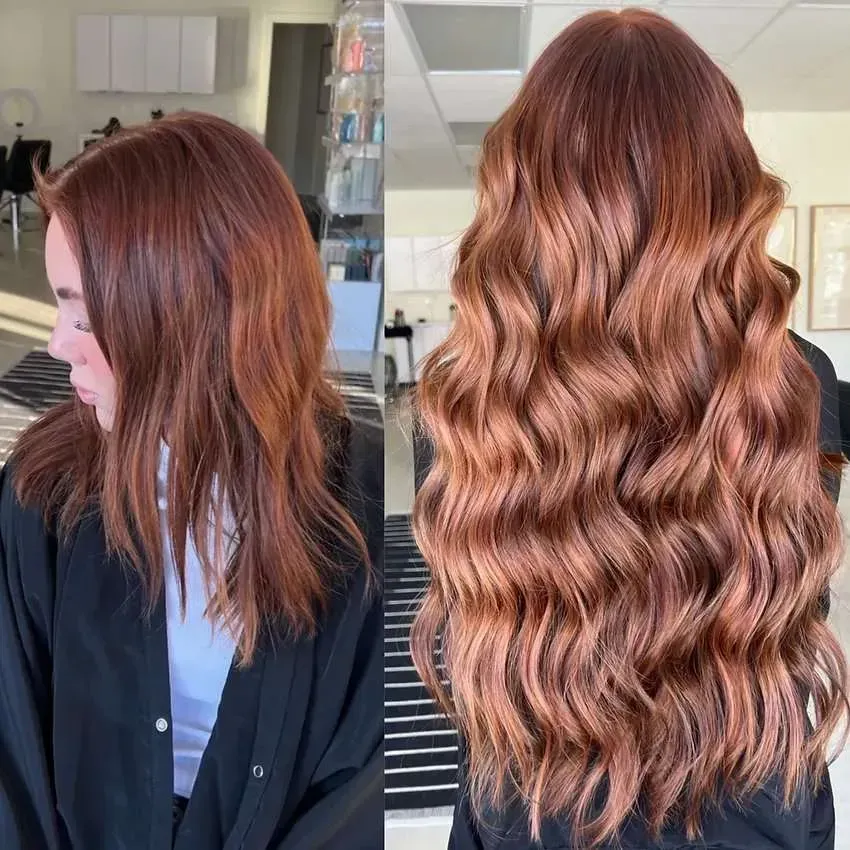
When the curl pattern is matched, the cut is dialed in, and the method is gentle, the payoff is the kind of full, effortless curls that used to only happen on a really good hair day. Many of our curly guests come in convinced their texture is a limitation and leave with more length, more fullness, and less styling time than they had before. You can see the kind of change we mean in our before and after hair extensions transformations — the goal is always hair that looks and moves like it’s entirely your own.
See What’s Possible for Your Curls
The best way to know how extensions will work with your curl pattern is to have a licensed artist see your hair in person. At Skandia Kollektiv in Salt Lake City, every curly-hair journey starts with a consultation — honest advice, curl-matched hair, and a plan built to keep your natural curls healthy.
Book a ConsultationFrequently Asked Questions
Can you get hair extensions on curly hair?
Yes. Curly, wavy, and coily hair can absolutely wear extensions beautifully — the key is matching the extension’s curl pattern to your own and choosing a gentle, weight-distributed method like NBR® or hand-tied wefts. Curly hair naturally hides the wefts well, so once the hair is color-matched and custom-cut to follow your curl shape, the blend can be seamless. A licensed stylist assesses your curl type, density, and shrinkage first so the length and texture are right for you.
What are the best hair extensions for curly or textured hair?
The best extensions for curly hair are 100% human hair chosen to match your specific curl pattern — labeled wavy, curly, kinky-curly, or coily — rather than straight extensions you try to curl. Human hair moves, shrinks, and responds to moisture the way your natural curls do, so it holds a curl and blends far better over time. For a gentle, long-wear install, professional methods such as NBR® (Natural Beaded Rows) and hand-tied wefts are ideal because no glue, heat, or tape ever touches your natural hair.
How do you blend extensions with curly hair so they look natural?
Blending curly hair comes down to three things: matching the curl pattern, a custom dry cut, and styling your natural hair and the extensions together. We cut curly extensions dry, curl by curl, so the layers follow the natural shape and shrinkage of your hair. Styling both with the same curl cream or gel unifies the texture and definition. Avoiding heavy heat is important too, since excess heat loosens curl patterns and makes the blend harder to maintain.
Will extensions damage or flatten my natural curls?
Not when they’re installed correctly. Damage and flattened curls come from too much tension, weight the hair can’t carry, or heat and glue — not from wearing extensions. A gentle, low-tension method like NBR® or hand-tied wefts spreads the weight across a row instead of pulling on individual curls, and keeping your move-up appointments every 6 to 8 weeks releases tension as your hair grows. Sleeping on a satin pillowcase or in a loose pineapple and keeping your curls moisturized protects both your natural pattern and the extensions.