Are hair extensions worth it? For most women, yes — but only when two things are true: the hair is genuinely high quality, and it’s installed with a professional, damage-free method. Get those right and extensions are one of the best investments you can make in how you look and feel every day. Get them wrong — cheap hair, a DIY kit, a heavy-handed install — and they can shed, tangle, and even harm the hair you already have. The honest answer isn’t “always” or “never.” It’s “absolutely, if you do it well.” Below, we’ll walk through exactly when extensions are worth the money, what really drives the cost, and how to make sure yours land firmly in the “worth it” column.
The Honest Pros: What Extensions Actually Give You
It’s easy to think of extensions as just “longer hair.” In reality, the length is often the least important benefit our guests talk about. Here’s what makes people say it was worth every penny:
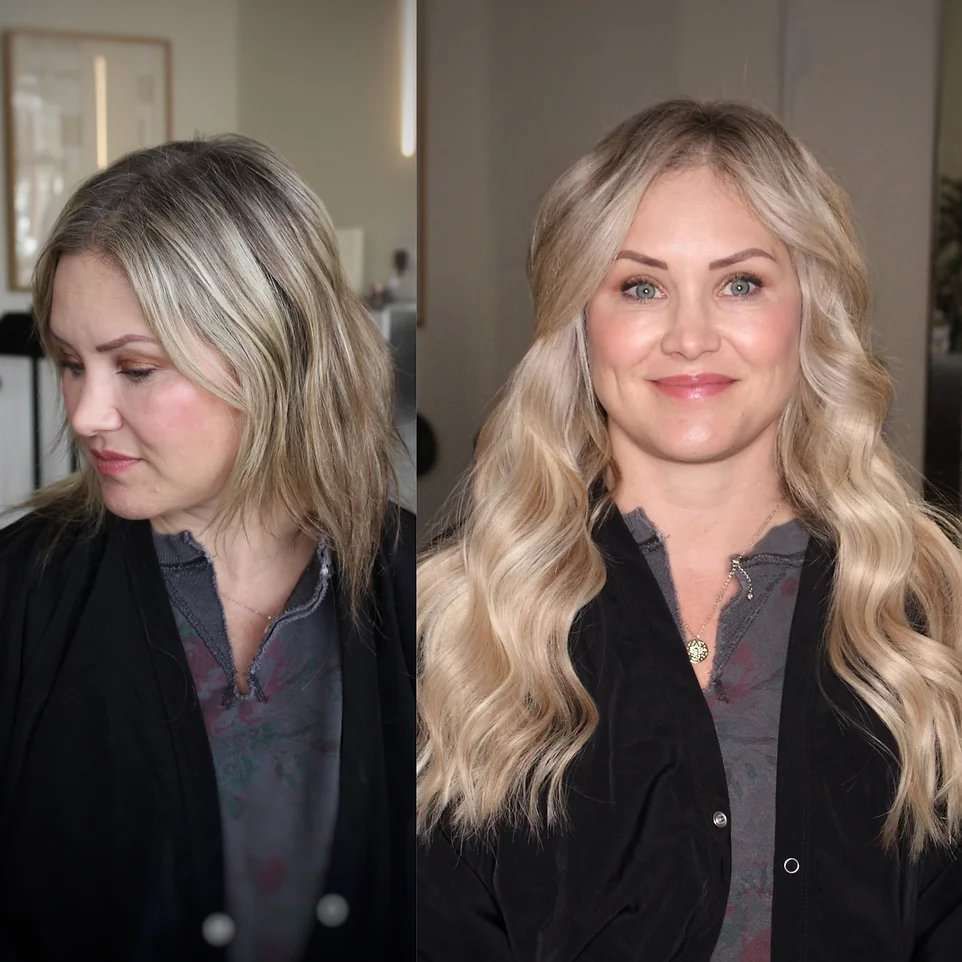
- Instant fullness and density. If your hair is fine, thin, or has lost volume over time, extensions add body that no product or blow-dry can replicate. This is the number-one reason women come to us — not length, but thickness.
- Length without the wait. Growing your own hair can take years, and not everyone’s hair will even grow past a certain point. Extensions give you the length now, on your timeline.
- Dimension and color you couldn’t get otherwise. Custom-colored wefts let a stylist add ribbons of blonde, lowlights, or a pop of dimension without putting your natural hair through heavy lightening.
- Easier styling and less heat. Full, blended hair holds a style beautifully, so many clients actually use fewer hot tools and spend less time getting ready.
- Confidence that shows up everywhere. This is the one that’s hard to put a price on. Hair you feel great about changes how you carry yourself — at work, at events, in photos, on an ordinary Tuesday.
When people ask “are extensions worth it,” what they’re really asking is whether those benefits justify the investment. For the right person, with the right hair and method, the answer is a confident yes.
The Real Costs — and What Actually Affects Them
Let’s be straight about money, because pretending extensions are cheap does no one any favors. Professional, salon-grade extensions are an investment, and the price varies quite a bit from person to person. Rather than quote exact numbers — which would be misleading, since every head of hair is different — here’s what determines what you’ll pay:
- How much hair you need. Adding fullness to fine hair takes a different amount of hair than going from a bob to mid-back length. More wefts, more hair, more cost.
- The quality and origin of the hair. Premium, cuticle-aligned human hair costs more upfront but lasts far longer and looks natural the entire time. This is the single biggest driver of both price and satisfaction.
- The method. Hand-tied and NBR® installs are meticulous, skilled work — they take hours and specialized training, which is reflected in the price (and the results).
- Custom color. Matching or blending wefts to your exact shade is a color service in its own right.
- Maintenance over time. Extensions aren’t one-and-done. They’re moved up every 6–8 weeks as your hair grows, so budget for upkeep, not just the first appointment.
Here’s the reframe that matters: the honest way to judge cost isn’t the sticker price — it’s the cost per wear. Quality hair you wear almost every day for the better part of a year is very different from a cheap set you replace in a month. We break the numbers down in detail in our guide to how much luxury hair extensions cost in Utah, and the most accurate way to know your investment is a quick consultation where we can actually see your hair and goals.
Who Hair Extensions Are Worth It For — and Who Should Wait
Extensions aren’t right for everyone at every moment, and a good stylist will tell you that honestly. Here’s how to know where you stand.
Extensions are absolutely worth it if you…
- Have fine or thinning hair and want fullness that products can’t deliver.
- Want length now and don’t want to wait years — or your hair won’t grow past a certain length on its own.
- Are growing out a short cut and want to skip the awkward in-between stage.
- Want dimension or brightness without heavily coloring your natural hair.
- Are willing to keep up with maintenance appointments and a simple home-care routine.
It may be worth waiting if you…
- Have hair or a scalp that’s currently compromised, over-processed, or shedding — heal first, add extensions later.
- Truly can’t commit to the upkeep right now. Extensions reward maintenance and punish neglect.
- Are expecting them to be completely hands-off. They’re low-effort day to day, but they’re not zero-effort.
If you’re on the fence, that’s exactly what a consultation is for. There’s no pressure — a great stylist would rather tell you to wait than sell you something your hair isn’t ready for.
Why the Method Matters More Than Almost Anything
If you take one thing from this article, make it this: the method is the difference between extensions being worth it and being a regret. Most horror stories — the shedding, the tangling, the breakage — don’t come from “extensions.” They come from the wrong extensions, applied the wrong way.
Cheap clip-ins, drugstore tape-ins applied at home, glue-in, and fusion methods can pull on your hair with concentrated tension, slip, or leave residue — and that’s where damage begins. By contrast, modern professional methods are designed to protect your natural hair:
- NBR® (Natural Beaded Rows) uses a beaded foundation with wefts sewn in — no glue, no heat, no tape. The weight is distributed across a row instead of yanking on individual strands, which is why it’s considered damage-free for most healthy hair.
- Hand-tied wefts are similarly gentle: fine, flat wefts tied onto a discreet foundation that lie flat, blend seamlessly, and move naturally.
These methods take skill and time, which is part of what you’re paying for — and precisely why they’re worth it. You can read more about how the modern options compare in our overview of the newest hair extension methods, or go straight to the details of our signature NBR® extensions. The takeaway is simple: a cheap method on quality hair still disappoints, and a great method is what makes the whole investment pay off.
How to Protect Your Investment
Once you’ve invested in beautiful extensions, a little care keeps them looking salon-fresh and stretches every dollar. None of this is complicated:
- Use the right products. Sulfate-free, extension-safe shampoo and conditioner keep the hair soft and the wefts intact. Skip anything harsh or heavily clarifying on the wefts.
- Brush gently, from the ends up. A proper extension brush and a few extra seconds prevent the tangling that ruins cheaper hair.
- Protect it at night. Loosely braid or tie your hair and consider a silk pillowcase to cut down on friction and matting.
- Be smart with heat and water. Use a heat protectant, keep tools moderate, and rinse and dry after swimming so chlorine and minerals don’t build up.
- Keep your maintenance appointments. Moving the wefts up on schedule (usually every 6–8 weeks) protects your natural hair and keeps everything sitting comfortably and looking seamless.
Cared for well, premium extensions reward you for months — which is the whole reason the investment makes sense.
Ready to Find Out If Extensions Are Worth It for You?
The only way to know your exact hair, method, and investment is to see it in person. At Skandia Kollektiv in Salt Lake City, every extension journey starts with a consultation — honest advice, no pressure, and a plan built around your hair.
Apply to Become a GuestFrequently Asked Questions
Are hair extensions worth the money?
For most people, yes — as long as you invest in quality hair and a professional, damage-free method. High-quality extensions are reusable for many months, blend seamlessly, and protect your natural hair, so the cost per wear is far lower than it first appears. Cheap clip-ins or DIY tape-ins that shed, tangle, or damage your hair are what make people feel extensions “weren’t worth it.” The value comes from the hair and the hands installing it, not just the price tag.
How long do good hair extensions last?
With professional installation and proper care, premium human-hair extensions such as NBR® and hand-tied wefts typically last about 9 to 12 months before the hair itself needs replacing, while the attachment is moved up every 6 to 8 weeks as your natural hair grows. Cheap or heavily processed hair often wears out in just weeks. Longevity depends on the quality of the hair, the method, and your home-care routine.
Do hair extensions damage your hair?
Extensions do not have to damage your hair. Damage comes from the wrong method, too much tension, or poor maintenance — not from extensions themselves. Gentle, weight-distributed methods like NBR® and hand-tied wefts installed by a trained stylist are considered damage-free for most healthy hair. Cheap glue-in, fusion, or badly applied tape-in extensions are far more likely to cause breakage, which is why method matters more than almost anything else.
Should I get hair extensions?
Hair extensions are worth it if you want more length, fullness, or dimension, you’re willing to maintain them, and you book a professional, damage-free method. They’re an excellent fit for fine or thinning hair, growing out a cut, or adding volume for a lifestyle or event. Consider waiting if your hair or scalp is currently compromised, or if you can’t commit to the maintenance visits and home care. The best way to know is a consultation, where a stylist assesses your hair and goals in person.