If you have been researching extensions lately, you have probably noticed that the technology has changed dramatically. The newest hair extension method looks nothing like the heavy, glue-heavy add-ons of a decade ago. Today the conversation is led by NBR® (Natural Beaded Row) and hand-tied wefts — techniques built around one idea: give you fuller, longer, natural-looking hair without sacrificing the health of the hair you already have. At Skandia Kollektiv in Salt Lake City, NBR® is our signature service, and it represents where the extension industry has been heading for years.
What Is the Newest Hair Extension Method?
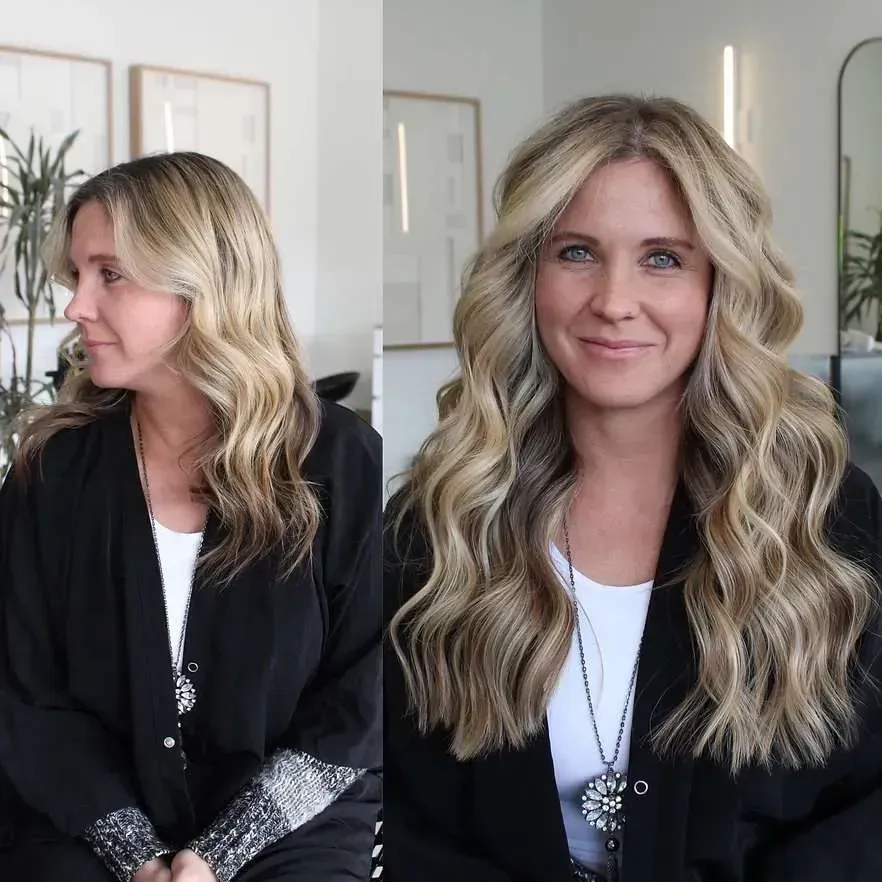
The newest hair extension methods are Natural Beaded Row (NBR®) and hand-tied wefts. Rather than bonding hair to your strands with tape, glue, or heated keratin, these techniques build a discreet foundation of tiny beads and thread, then hand-stitch flat wefts of hair onto that beaded row. Nothing is melted, taped, or fused to your hair.
The NBR® method takes this a step further. It is a highly customized approach that maps out where rows sit on your head, how many rows you need, and how your color should be blended — all so the finished result mimics the way your hair naturally grows. The wefts lie flat and lightweight against the scalp, which is why guests are consistently surprised by how comfortable and undetectable they feel. This is the same family of technique as our hand-tied hair extensions: no heat, no adhesive, just carefully placed wefts secured with thread.
Why does “newest” matter here? Because each generation of extension technology has moved in one clear direction — away from adhesives and toward methods that protect your natural hair. NBR® and hand-tied wefts are the current expression of that evolution.
How Newer Methods Compare to Older Ones
To understand why hand-tied and NBR® extensions feel like such a leap forward, it helps to see how the older methods work — and where they fall short. Here is an honest look at the most common techniques, from oldest to newest.
Clip-Ins
Clip-ins are the most temporary option: wefts of hair on small pressure clips that you put in and take out yourself, usually for a single day or event. They are convenient and low-commitment, but they are not a long-term solution. Daily clipping and unclipping in the same spots can stress the hair, and they never look as seamless as a professionally installed method.
Tape-Ins
Tape-in extensions sandwich small sections of your hair between two adhesive-backed wefts. They are quicker to apply than many methods, but the adhesive is the weak point: tape can slip, especially with fine or oily hair, and removal requires solvents. Because the bond relies on glue, tape-ins typically need to be re-taped every 6 to 8 weeks, and improper application or removal can tug on fragile strands.
K-Tip / Keratin Bonds
K-tip (also called fusion or keratin-tip) extensions attach individual strands using small keratin bonds melted to your hair with heat. They can look natural when done well, but the combination of heat and hard bonds is demanding on the hair. The rigid bonds can be uncomfortable to sleep on, may cause tangling at the attachment point, and the heat used to apply and remove them is a real consideration for anyone with delicate hair.
Micro-Links / I-Tips
Micro-link (bead or I-tip) extensions thread individual strands through tiny metal beads that are then clamped shut — no glue or heat. This makes them gentler than fusion bonds, but because each bead grips a small section of hair, tension has to be managed carefully. Too-tight beads or too much weight in one area can stress the roots.
Traditional Sew-Ins
Sew-ins braid your natural hair into cornrows and stitch wefts onto the braids. They use no glue or heat, which is a genuine advantage, but the tight braided base can be heavy and create tension, and the bulk does not always lie flat under fine hair.
Hand-Tied Wefts & NBR® (The Newest Methods)
Hand-tied wefts and the NBR® method keep the best parts of the older adhesive-free options — no tape, no glue, no heat — while solving their biggest drawbacks. Instead of tight braids or single-point bonds, the wefts are secured to a flat, strategically placed beaded row with thread. The contact points are minimal and distributed, so there is far less tension and bulk. The result is a flatter, lighter, more comfortable install that lays seamlessly, can be pulled into a high ponytail, and can be washed, brushed, and blow-dried like your own hair.
The trend across every generation of extension technology is the same: less adhesive, less heat, and more emphasis on protecting your natural hair. NBR® and hand-tied wefts are where that trend is today.
Why “Newest” Also Means Healthier and More Natural
It is tempting to assume “newest” just means “trendy.” In extensions, it actually means something more meaningful: healthier for your hair and more natural in appearance. Here is why the two go hand in hand.
- No adhesives or heat. Tape residue and melted keratin bonds are the most common culprits behind extension-related breakage. Removing them entirely removes that risk.
- Weight is distributed, not concentrated. Because hand-tied wefts sit on a beaded row rather than pulling on a single strand or bond, the weight of the hair is spread across a wider foundation, reducing tension on your roots.
- They lie flat and blend seamlessly. A flat foundation means no lumps or hard bonds to hide. With 100% cuticle-aligned human hair, custom color, and a proper cut, the extensions part and move like hair growing from your own scalp.
- They work beautifully for fine and thinning hair. The gentle, low-tension install makes NBR® and hand-tied wefts one of the few methods genuinely suited to fragile or thinning hair that could not tolerate glue or heat.
In other words, the reason these methods are the newest is precisely the reason they are the most natural: they were designed to add hair while respecting the hair you already have.
What to Look For in a Hair Extension Method
Not every “new” label is meaningful, so focus on the factors that actually affect your results and your hair’s health. When you are comparing methods — or salons — look for:
- Quality of hair. 100% cuticle-aligned human hair is essential for smoothness, shine, and longevity. Lower-grade hair tangles and sheds no matter how good the method is. (For a deeper look at hair quality, read our guide on premium vs. budget hair extensions.)
- Attachment method. Adhesive-free, heat-free installs like NBR® and hand-tied wefts are the gentlest on your natural hair.
- Customization. The number of rows, their placement, and the color blend should be tailored to your head and goals — not a one-size-fits-all kit.
- Stylist training. Even the best method fails in untrained hands. Ask whether your stylist is certified in the specific technique.
- Maintenance plan. A reputable salon will tell you upfront how often you need move-up appointments and what care your extensions require at home.
Who Each Method Suits Best
The “best” extension method is the one that fits your hair type, lifestyle, and goals. Here is a quick guide to who each option tends to suit:
- Clip-ins — occasional wearers who want temporary volume or length for a specific event, with no long-term commitment.
- Tape-ins — those wanting a quicker install and comfortable with re-taping every several weeks, ideally with medium-density hair.
- K-tip / fusion — guests who want strand-by-strand detail and whose hair is healthy enough to tolerate heated bonds.
- Micro-links / sew-ins — those who prefer a glue-free, heat-free option and have the density to carry a beaded or braided base comfortably.
- NBR® and hand-tied wefts — anyone seeking the most natural, damage-conscious, long-lasting results, including guests with fine, thin, or fragile hair. This is why NBR® has become the go-to choice for so many of our guests in Salt Lake City and across Utah.
Because the right answer depends on your hair, the most reliable way to choose is a professional consultation, where a trained stylist can assess your hair in person and recommend the method that will actually deliver the look you want.
Frequently Asked Questions
What is the newest hair extension method?
The newest hair extension methods are Natural Beaded Row (NBR®) and hand-tied wefts. Instead of the tape, glue, or heated keratin bonds used by older techniques, these methods attach hand-tied wefts to a foundation of tiny beads and thread. The result is a flat, lightweight, seamless install that adds length and volume while protecting the health of your natural hair. At Skandia Kollektiv in Salt Lake City, NBR® is our signature service.
Is NBR® better than tape-in or K-tip extensions?
For most guests who want long-term, natural-looking results, yes. NBR® uses no tape, glue, or heat, so there is no adhesive or bond that can slip, break, or stress fragile strands. It sits flatter and more comfortably than most tape-ins, blends more seamlessly than individual K-tip bonds, and is fully customized to your hair. Tape-in and K-tip extensions can still be a good fit for certain hair types and budgets, which is why we recommend a consultation to match the method to your hair.
What is the most natural type of hair extension?
Hand-tied wefts installed with the NBR® method are widely considered the most natural type of hair extension. Because the wefts lie flat against the head with no bulky bonds and use 100% cuticle-aligned human hair, they move, part, and style like hair that is genuinely growing from your scalp. When color-matched and cut by a trained stylist, the result is virtually undetectable.
Which hair extension method lasts longest?
The hair used in premium NBR® and hand-tied installs can last roughly 8 to 12 months or longer with proper care, which is among the longest of any method. The install is refreshed at maintenance appointments every 6 to 8 weeks as your natural hair grows. By comparison, tape-ins are typically re-taped every 6 to 8 weeks and clip-ins are temporary, day-to-day wear.
Experience the Newest Method in Salt Lake City
The newest hair extension methods are not about chasing trends — they are about getting fuller, more beautiful hair in a way that keeps your natural hair healthy. If you are ready to see whether NBR® or hand-tied wefts are right for you, the best next step is a complimentary consultation with our team, where we will assess your hair and design a fully customized plan.