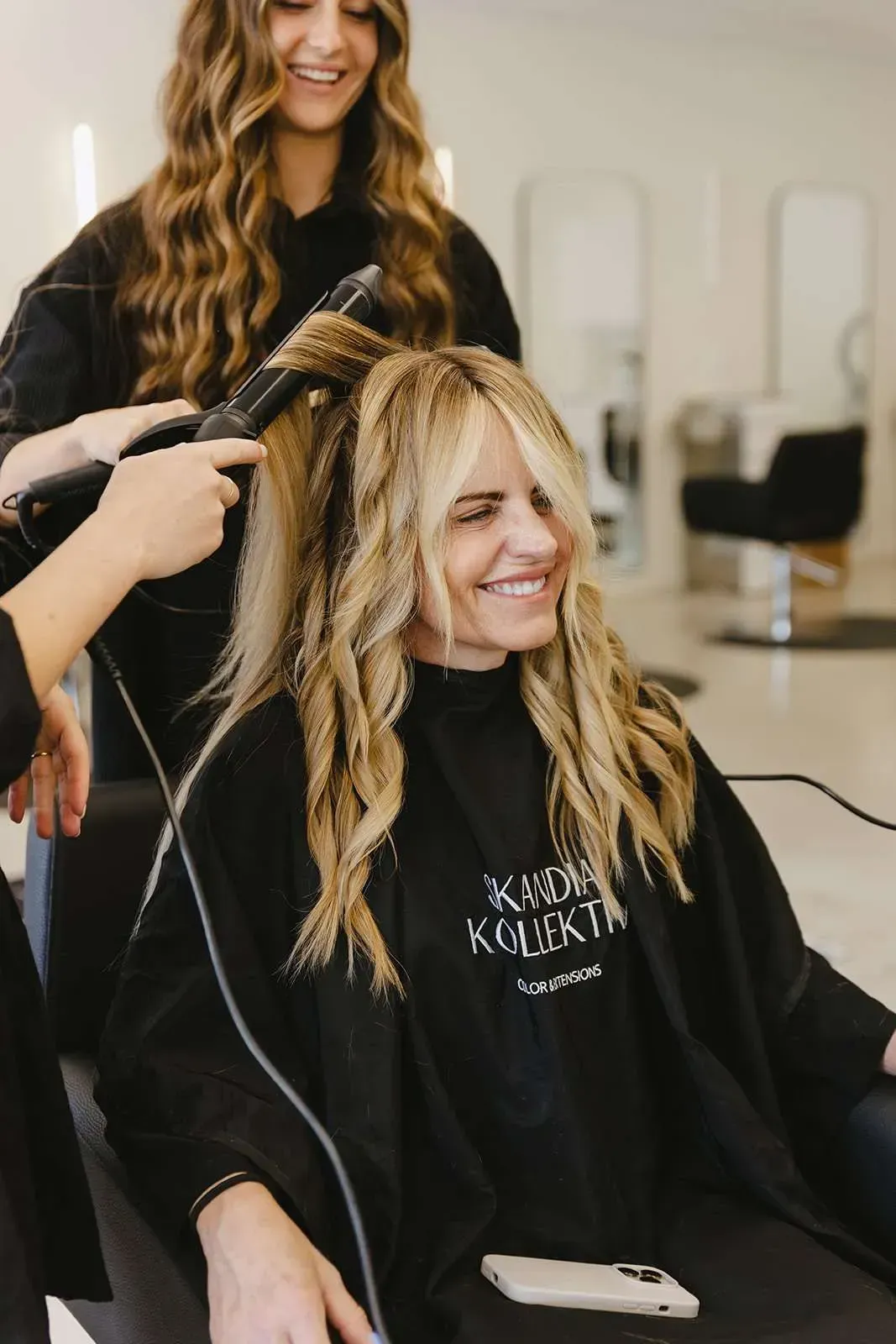
Navigating a Utah winter can be tough on your hair. The cold, dry air outside — paired with the heated, low-humidity air inside — pulls moisture straight out of the hair shaft and scalp, which is why so many of us reach the coldest weeks with static, frizz, and brittle ends. In our Salt Lake City studio, this is the season we hear the most about dry, itchy scalps and hair that suddenly won’t hold moisture, whether guests wear their natural hair or luxury extensions. The good news: with the right winter hair care strategy, you can keep your hair soft, shiny, and healthy all the way through the season. Below is the exact routine we walk our Utah guests through.
Why Utah Winters Are So Hard on Your Hair
Utah’s high-desert climate is beautiful, but it’s a lot for your hair to handle in the colder months. Three things stack up at once along the Wasatch Front:
- Low humidity, inside and out. Cold winter air holds very little moisture, and indoor heating dries it out even further. Your hair loses hydration to the air around it all day long.
- Hard water. Much of the Salt Lake Valley has hard water, and the mineral buildup leaves hair feeling dull and coated — it can even make blonde color look dingy or brassy over time.
- Temperature swings and friction. Moving between the cold outdoors and dry heat indoors, plus hats, scarves, and coat collars, creates static and breakage, especially at the ends and around the hairline.
Understanding the “why” makes the routine below make sense: everything we recommend is about putting moisture back in and protecting your hair from the elements. If you’re not sure whether it’s the season or your hair care that’s the problem, our post on why your hair extensions feel dry and how to fix it walks through the most common causes we see.
Simple Steps for Healthy Winter Hair
Moisturize Your Mane
To combat the dry Utah winter, your hair needs extra moisture. Choose a sulfate-free shampoo and a rich, hydrating conditioner, and focus the conditioner from mid-shaft to ends where hair is oldest and driest. Add a weekly deep-conditioning mask or bond treatment — in our experience it’s the single change that makes the biggest difference for guests fighting winter dryness. A lightweight leave-in or a few drops of oil on damp ends before you head out into the cold helps seal that moisture in.
Protection Is Key
The winter elements can be harsh. Protect your hair by covering up with a hat or scarf when you’re outside — it shields your lengths from cold, dry wind and UV that still reaches you off the snow. To avoid the static and breakage that wool and knit can cause, look for accessories lined with silk or satin, and tuck longer hair into your coat. A silk or satin pillowcase does the same job overnight, cutting friction while you sleep.
Wash Wisely
Washing your hair too frequently strips it of the natural oils it needs most in winter. For most of our guests, two to three washes per week is plenty. Use lukewarm rather than hot water — hot showers feel wonderful in January but they’re rough on both hair and color — and stretch the days between washes with a light dry shampoo at the roots. If hard-water dullness is building up, a gentle clarifying or chelating treatment every few weeks helps reset shine.
Nutritional Support
Your hair’s health reflects what you eat and how well you hydrate. A balanced diet with plenty of protein, vitamins, and omega-3 fatty acids supports stronger hair from the inside, and it’s easy to under-drink water when it’s cold out — so keep the water bottle handy. Hydration matters just as much in winter as it does in a Utah summer.
Gentle Does It
Minimize heat styling to avoid drying your hair out further, and always use a heat protectant when you do reach for hot tools. Detangle with care using a wide-tooth comb or a wet/loop brush, working gently from the ends up. And never head outside — or to bed — with wet hair in freezing weather; damp hair is fragile and far more prone to breakage in the cold. If you love your hot tools, our take on how to protect extensions from heat damage covers the settings and habits we recommend.
Caring for NBR® Extensions Through Winter
If you wear extensions, winter care matters even more, because those beautiful lengths can’t draw moisture from your scalp the way your natural hair does — they rely entirely on you to keep them hydrated. Our specialty is the NBR® (Natural Beaded Row) method, and here’s how we coach guests to protect a hand-tied install when the temperature drops:
- Hydrate the mid-lengths and ends with an extension-safe, sulfate-free conditioner and a weekly mask, keeping product off the bead rows themselves.
- Dry the roots and rows fully before going outside or to bed — sleeping on damp hair in cold, dry air stresses the attachment points and invites tangling.
- Brush gently, top to bottom, holding the row with one hand so you’re never tugging at the beads, and braid or loosely tie hair before sleep.
- Keep your maintenance appointments, so we can re-check tension, refresh placement, and make sure everything stays hydrated and comfortable.
Curious how these habits keep your hair looking its best over the long run? Our guide to keeping hair extensions soft and shiny goes deeper on the products and everyday routines we love.
When to Seek Professional Advice
If dryness, breakage, or a flaky, irritated scalp persists no matter what you try at home, it’s worth having a professional take a look. Sometimes the fix is as simple as swapping a product or adjusting your water; other times your hair is asking for a hydrating salon treatment or a color refresh to counter hard-water dullness. As a licensed NBR® artist here in Salt Lake City, I’d rather help you get ahead of winter damage than repair it later — a quick conversation usually saves a lot of guesswork. If you’re new to the area or still looking for your stylist, here’s what makes Skandia Kollektiv a hair salon worth the drive near Salt Lake City. You can always reach out through our contact page with questions about your routine.
Keep Your Hair Thriving All Winter
Maintaining beautiful, healthy hair through a Utah winter doesn’t have to be complicated. Put moisture back in, protect your hair from the dry air and friction, wash a little less often, and be gentle with your styling — do those four things and your hair (and your extensions) won’t just survive the season, they’ll thrive. Let your hair shine through winter and beyond with a routine built for Utah’s unique climate.
Winter Hair Care FAQs
Does Utah’s winter really damage your hair?
Yes. Utah’s winter combines cold, low-humidity air outdoors with dry, heated air indoors, plus hard water across much of the Salt Lake Valley. That pulls moisture out of the hair shaft and scalp, which shows up as static, frizz, brittleness, and an itchy or flaky scalp. The good news is that a few adjustments to how you wash, hydrate, and protect your hair make a big difference through the season.
How should I care for NBR® hair extensions in the winter?
Keep the wefts and bonds hydrated with a sulfate-free, extension-safe conditioner from mid-shaft to ends, and add a weekly hydrating mask. Always dry your roots and the bead rows fully before going outside or to bed, because sleeping on damp hair in cold, dry air stresses the attachment points. Brush gently with a loop or wet brush, protect your hair from friction with hats and scarves, and keep your maintenance appointments so we can re-check tension and hydration.
How often should I wash my hair in a Utah winter?
For most guests, two to three washes per week is plenty in winter. Washing daily strips the natural oils your scalp and lengths need most in dry, cold weather. Stretch time between washes with a light dry shampoo at the roots, and use lukewarm rather than hot water to avoid drying out your hair and extensions.
Can hard water affect my hair color and extensions?
It can. Hard water is common across the Salt Lake area, and the mineral buildup can leave hair dull, make blonde color look dingy or brassy, and reduce how well conditioner absorbs. A gentle clarifying or chelating treatment every few weeks, plus a shower filter, help keep both your color and your extensions looking bright. We’re happy to recommend the right routine for your water and your hair at your next visit.